How the UK’s DMCC Act Re-writes the Rules on Dark Patterns
Britain’s new Digital Markets, Competition and Consumers Act (DMCC) might seem, at first glance, like another bit of regulatory fine print.
Thomas Horak
CEO
Britain’s new Digital Markets, Competition and Consumers Act (DMCC) might seem, at first glance, like another bit of regulatory fine print. But peel back the layers and it reveals something deeper: a cultural and moral reordering of how businesses should relate to the people they serve. Deceptive interfaces are being placed in the same ethical category as false advertising. And rightly so.
I recently joined a panel to discuss this shift with consumer psychologist Kate Nightingale and Felicity Forward, a legal expert at Shoosmiths London. The conversation ranged widely, as these kinds of interdisciplinary dialogues do, but kept circling back to this: trust isn’t just a marketing buzzword anymore, it’s a regulatory requirement.
The DMCC’s consumer-facing obligations include:
Ban on drip pricing – total cost (fees, taxes, mandatory add-ons) must be visible at first impression.
Subscription clarity – pre-contract screen must state billing cadence, auto-renew trigger and minimum term; reminder e-mails at 3 / 14 / 30-day checkpoints.
Dark-pattern test – no fake countdowns, pre-ticked boxes or confirm-shaming copy.
Prominent pricing cues – price, delivery and returns need equal visual weight to “Add to basket”.
One-click exit – cancellation flow no harder than sign-up, plus instant e-mail confirmation.
Authentic reviews only – paid-for or generated reviews must be labelled; fake-review farming risks CMA fines up to 10 % of global turnover.
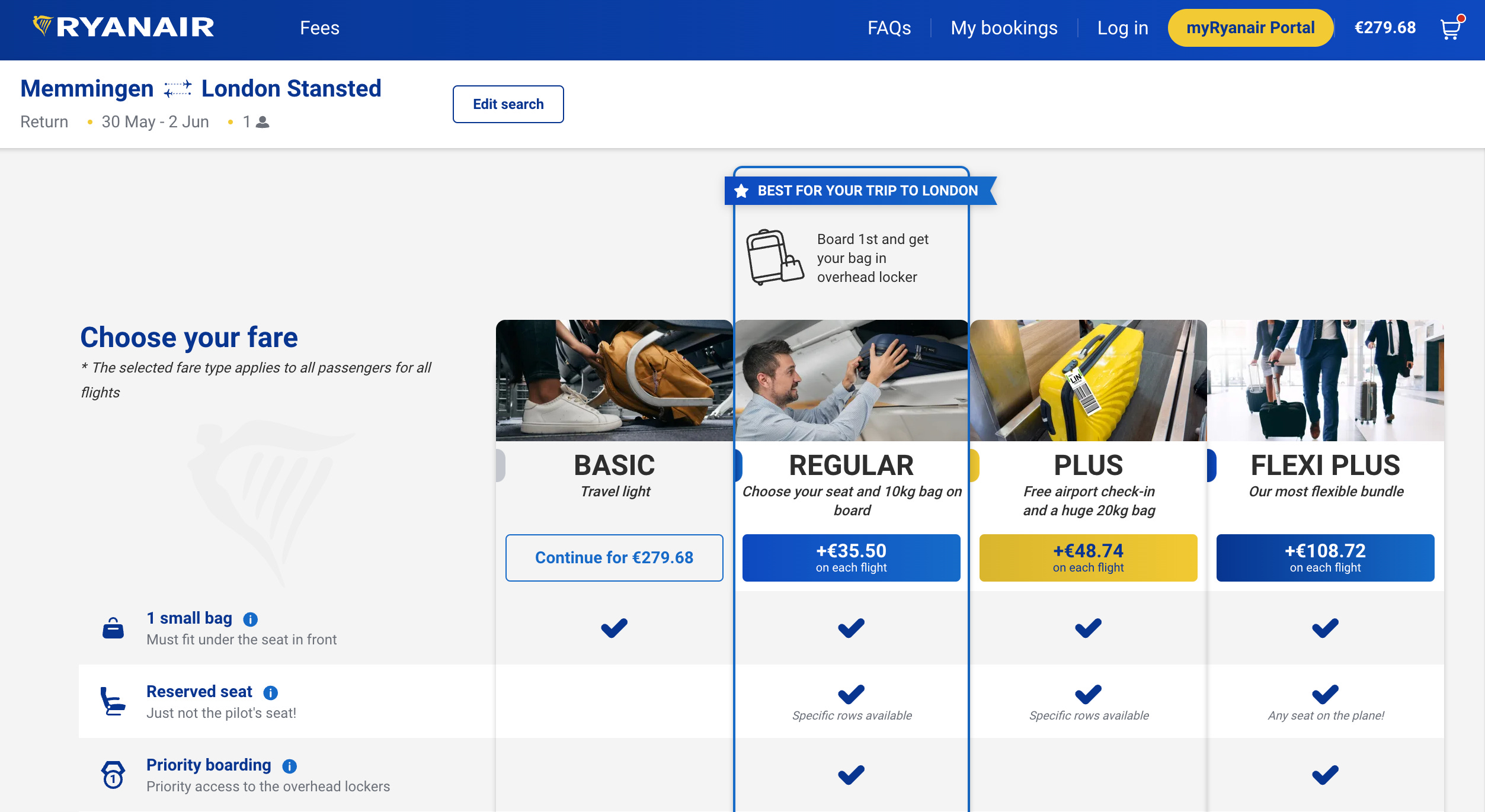
The classic dark patterns example: Ryanair’s drip pricing
It’s through micro-interactions that a brand can show whether they’re on the same side as their audience, or trying to extract the most value out of them. Direct-to-consumer subscription players such as Heights and Loveveryput that principle to work: pausing, skipping or cancelling takes one tap and is mirrored in every order e-mail. In analytics we can see well-designed cancellation flows cut churn by 10–40 % for high-volume DTC brands.
Relationships with Brands go beyond Parasocial
Kate offered a correction to how we’ve traditionally viewed consumer-brand relationships. We’re not merely fans or followers of a brand—we’re partners in a transaction of mutual meaning. I give you data, money, and attention. You give me not just goods, but identity, functionality, and sometimes even community. Loyalty accrues touchpoint by touchpoint; break the chain once and the ledger resets to zero.
UX is the moment of truth. Section 312k BGB (“Kündigungsbutton”) now forces German merchants to surface an unmissable ‘Cancel now’ flow; miss the spec and the contract becomes voidable. That legal muscle simply codifies a wider expectation: the rules must feel symmetrical. If a buyer needs detective skills to exit—or hits a hidden fee mid-checkout—the trust dividend evaporates. Being immersed in German culture for the last 30 years I can say, this was well overdue legislation.
Trust in brands doesn’t just fade away, it detonates. The vast majority of consumers rely on recommendations from people they know or creators they trust online to be impartial. Thus, any misstep is viral ammo. Handle conflict cleanly or watch TikTok do it for you.
New Dark Patterns
While legal texts can enforce rights, they cannot create meaning. That still belongs to design. The problem isn’t that the law lacks authority. It’s that most websites lack hierarchy of attention, of importance, of empathy.
This is where the DMCC, for all its clarity, begins to wobble. It demands disclosures, but doesn’t consider how to present them meaningfully. So companies, in fear of penalties, may throw everything at the user: bold fonts, dense language, visual noise. The irony? In trying to eliminate dark patterns, we may accidentally birth new ones.
Cookie-banner fatigue proves the point. A 2024 cross-EU study found that when rejecting cookies needed more than one click, 90 % of users just hit “Accept all” to clear the screen. Law without design merely reshuffles the dark-pattern deck.
Put bluntly, the problem is not legal hierarchy but absent design hierarchy. But since the law is fundamentally about user behaviour, this is concerning.
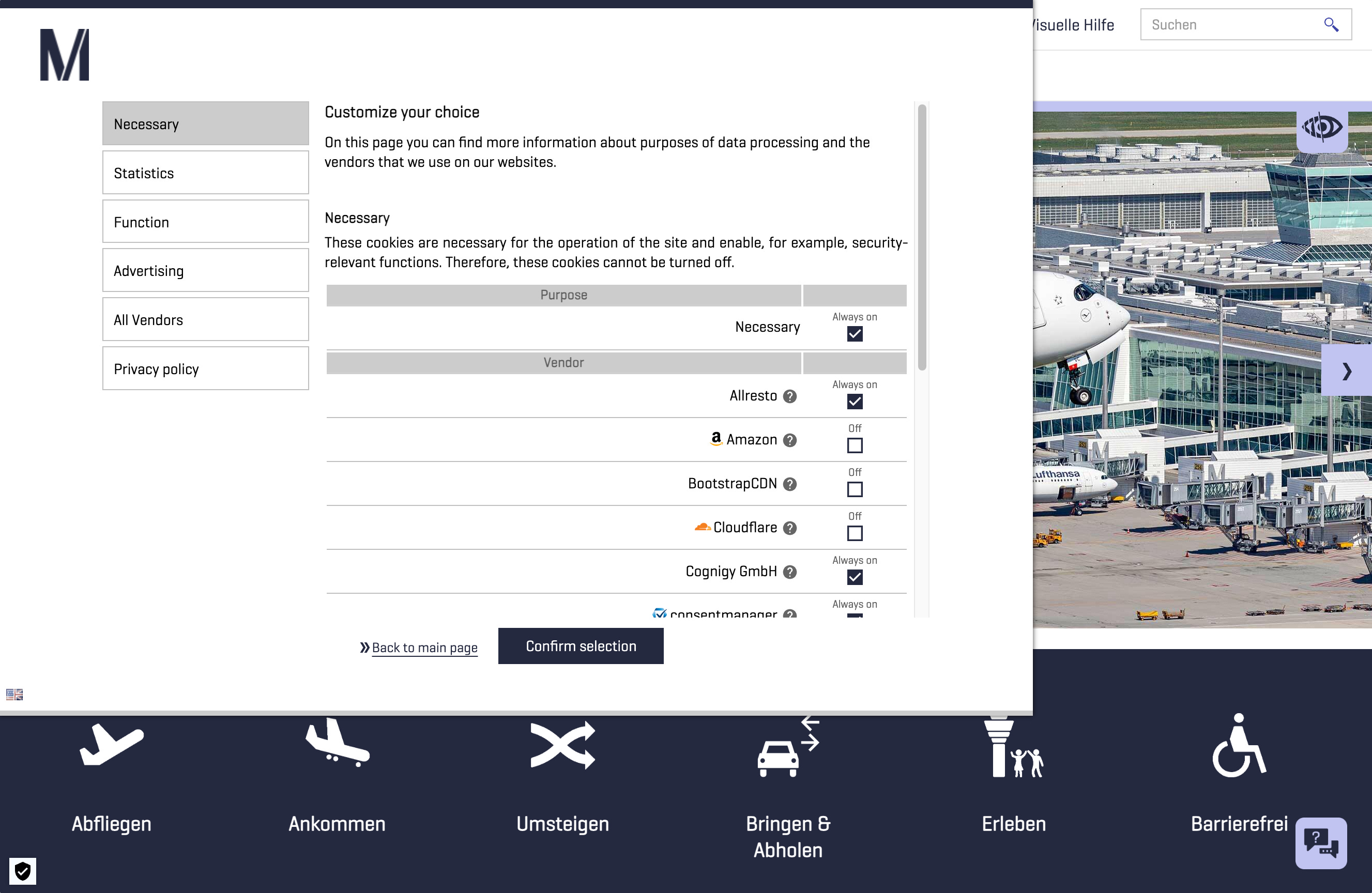
Munich Airport Cookie Consent - here you have the option to see a condensed version, but some sites force you to either “confirm all” or manually deselect from the entire list
When everything is important, nothing is important.
I learned the lesson in 3rd grade, bold-facing half my Word homework until my grandmother pointed out the point of bold was scarcity. The same principle holds for interface design: emphasise too much and users treat everything as wallpaper. The pricing cue guideleine that ‘price, delivery and returns need equal visual weight to “Add to basket”’ might be well intended, but is basically applying bold to an entire paragraph.
Users navigate a regular e-commerce page in a few predictable passes.
Orientation: ‘Am I on the right page?’ (title, image, variant).
Value check: ‘Can I justify the spend?’ (price, shipping, stock).
Risk filter: ‘Do I trust this seller?’ (returns, cancellation, reviews).
Design to satisfy these intentions with minimal eye-travel and expected patterns. Bury any one of them or make the types of information indistinguishable and the hunt jumps to a rival brands tab.
Legislation + Design → Who is the winner?
Good UX answers those three questions cleanly. DMCC compliance ensures the answers are true. But some teams will game the overlap, flooding screens with “everything important” disclosures. That tactic—call it compliance clutter—technically obeys the letter while reviving the very gotchas the Act targets.
Trust as brand growth
Trust is the growth engine you can’t buy. It compounds. Every honest interaction reduces friction in the next, lifts conversion, and pushes retention costs toward zero. In markets where most corporate value now sits in intangible assets, a brand’s credibility is a balance-sheet item: erode it with hidden fees or hostage-style cancellation flows and the damage surfaces first in referral traffic, then in valuation multiples. Acquisition spend can patch holes for a quarter, but word-of-mouth runs on its own budget and scales in both directions. Brands that default to transparency—explicit pricing, symmetrical opt-out, timely support—turn that goodwill into higher repeat purchase rates and organic advocacy competitors can’t out-spend. Tony’s Chocolonely, Notion and Sheep Inc rose from grassroots to cult status the same way: Tony’s open-sourced its slave-free cocoa supply chain, Notion ships from a public roadmap shaped by community votes, and Sheep Inc stitches a blockchain-tracked carbon footprint into every sweater. Lose trust once and you don’t just lose the customer; you lose everyone in their network who never enters the funnel.
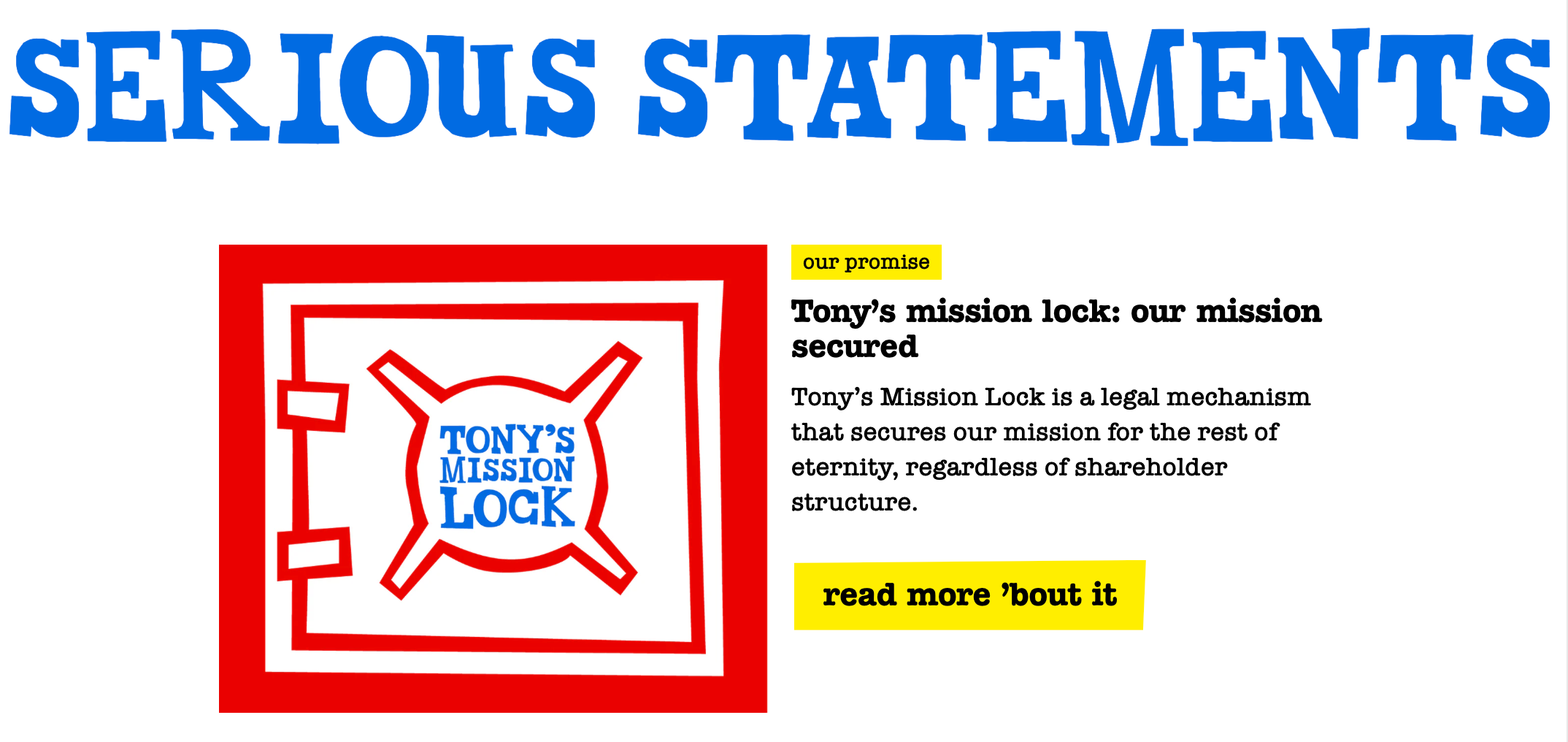
Tony’s Chocolonely have the right legal, comms and UX system in place to project trustworthiness
CMA & DMCC Perspective
I’ve spent much of my career opposing dark patterns. I’ve lost pitches over it, turned down contracts because of it. The principle of DMCC, as well as the EU’s DMA, are a watershed moment for customer protection. But it cannot have the desired effect without design input.
If trust is the new growth engine, then good design will be the fuel.
A practical next step: To navigate the DMCC confidently, you need more than legal advice—you need a design partner who works shoulder-to-shoulder with legal specialists from the start. Our agency collaborates directly with expert counsel to prototype compliant flows, annotate them with relevant DMCC clauses, and iterate in real time with legal sign-off. It’s like one integrated team, not two disconnected workflows. That means fewer delays, fewer rewrites—and experiences that build trust by design. Reach out if you’re ready to turn compliance into a competitive edge.