Services
Projects
Blog & Podcast Lifestyle & Wellbeing


Food & Nutrition

Retail & Ecommerce
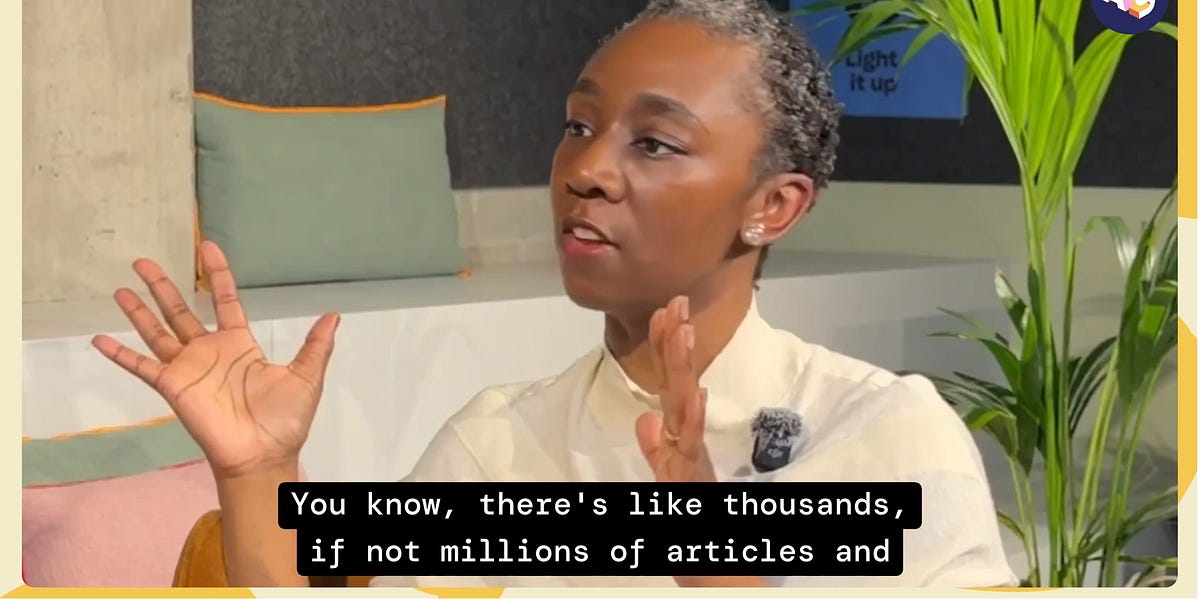
Most people treat art and strategy as opposites. Onika Simon has spent 25 years arguing they are looking at the same problem from opposite ends.
Changing Shapes is a podcast for founders, builders and operators who want to build things that connect with the people who use them. Host Tom Horak, founder of All Shapes, talks with people who have built that relationship between product and audience, and gets them to walk through exactly how.
Most people treat art and strategy as opposites. Art is creative, intuitive, emotional. Strategy is analytical, systematic, commercial. They live in different rooms, hire different people, and rarely share a meeting.
Onika Simon has spent 25 years arguing that this is the wrong way around.
“Brands are like systems trying to find a way to talk to people,” she says. “Art is how people talk to other people about systems.” The two are not in different rooms. They are looking at the same problem from opposite ends. Brands are trying to reach humans through the systems they have built. Artists are trying to reach humans about the systems we are all living inside. Whichever side you start from, the work is about the same thing: the relationship between the systems we operate inside and the people they are supposed to serve.
Onika has spent her career building bridges between those two ends. She trained in the big global corporate strategy agencies, the WPP marketing fellowship, advertising on Madison Avenue. She studied philosophy at university and was drawn to the science of human decision-making. She is a strategist, a planner, a researcher, a curator. She is also the daughter of grandparents who arrived in London and had to learn that careful communication was the only thing that would let them survive in a system designed not to see them. That lineage runs through everything she does now.
For the second half of her career, she has been a freelancer and a founder. She works with B Corps, purpose-led ventures, and corporates that have started to notice the distance between how they make money and what that does to the communities they touch. Her own description of the role is “water bearer.” She carries water between capitalism and communities. Most companies she works with already know how to grow. What they don’t know is how to close the gap between their commercial impact and the impact they are having on everyone else.
There is one story she tells that holds the whole practice together. It happened in Paris in 2016, after the Charlie Hebdo attacks, in a meeting room with the French Ministry of Defence and Cisco. They were designing an emergency-alert system that could send different messages to every mobile phone in the city. Residents, tourists, commuters, workers, all getting the right instruction at the right moment. They had the technology. Three hours into the meeting, they were still going nowhere.
Onika sat with it. She watched a room full of decorated specialists talk about what they each knew, and she noticed that nobody was talking about the person on the other end of the alert. A person who hears a siren, feels their phone go off, has to overcome the physiological response to panic, and then has to follow an instruction. None of the specialists were thinking about that person. The artist she eventually suggested they bring in had already spent his career thinking about exactly that.
He came in. He showed them his praxis. He talked about how, when he intervenes in someone’s journey, he is not scaring them. He is inviting them. The specialists had been working on the last touch. The artist was working on the first one.
This is the line that sits at the centre of Onika’s whole practice. Specialists, in her view, are trained to think about the last touch. The deliverable, the outcome, the message that gets sent, the screen that ships, the conversion at the end of the funnel. Artists are trained to think about the first touch. The moment of contact. Whether the person on the receiving end will even register what is being given to them, let alone act on it.
The reframe is bigger than it sounds. Most product teams treat the first touch as a marketing problem, separate from product. Most strategy teams treat it as a research problem, separate from strategy. Most policy teams treat it as a communications problem, separate from policy. In every case, the work of figuring out what the first touch feels like to a real human being gets handed off to a different department, often after the core decisions have already been made. By the time anyone asks, the room has already shut.
There is a related thread worth pausing on. Onika thinks artists are both specialists and generalists at once. Every artist has a flame, a thing that lights up when they touch a particular subject or material. That is the specialist part. But every artist is also generalist by necessity, because the work of being an artist requires you to learn how to feed yourself, defend your work, communicate your value, and survive in a system that is not built for you. That kind of generalism, Onika points out, makes artists some of the most entrepreneurial people she has ever met. Most entrepreneurs, she says, could never be artists.
The implication for any organisation hiring or commissioning is uncomfortable. The skill set artists develop, generalist range married to specialist intensity, is exactly the skill set most companies say they want from senior strategists, founders, and product leaders. And it is exactly the skill set most companies systematically fail to recognise when an artist walks through the door, because artists are coded as creative talent rather than as strategic talent.
Onika’s whole practice, in the end, is about correcting that mistake. She is in the room because she can ask the question the specialists are not asking. She brings the artist into the room because the artist can ask a different one. And the room ends up somewhere it would never have got to on its own.
If you build things, the test from Onika’s episode is sharp. Look at the work in front of you and ask who isn’t in the room. Then ask what the first touch feels like for them. If the answer to either question is “we’ll figure that out later,” the work has already started missing the people it was supposed to reach.
Listen to the full episode on YouTube.
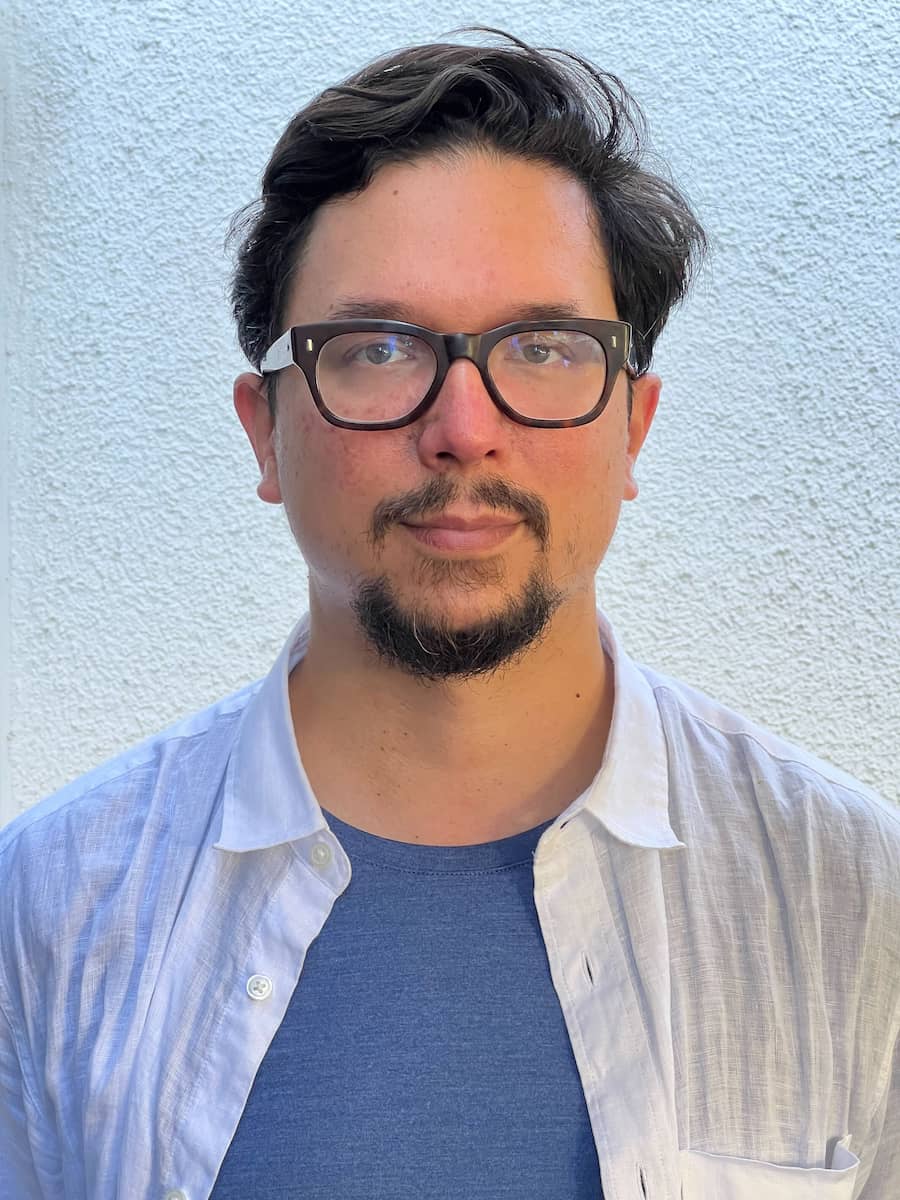
Tom Horak is the founder of All Shapes, a strategy, design and development studio behind products including Five Minute Journal and Doctor’s Kitchen. He started his career in fine art and has spent over a decade thinking about what makes the relationship between a product and its audience hold up.
Changing Shapes lands here every week. Subscribe to get new episodes and essays in your inbox.
Recorded at The Social Hub Berlin.

