Services
Projects
Blog & Podcast Lifestyle & Wellbeing


Food & Nutrition

Retail & Ecommerce
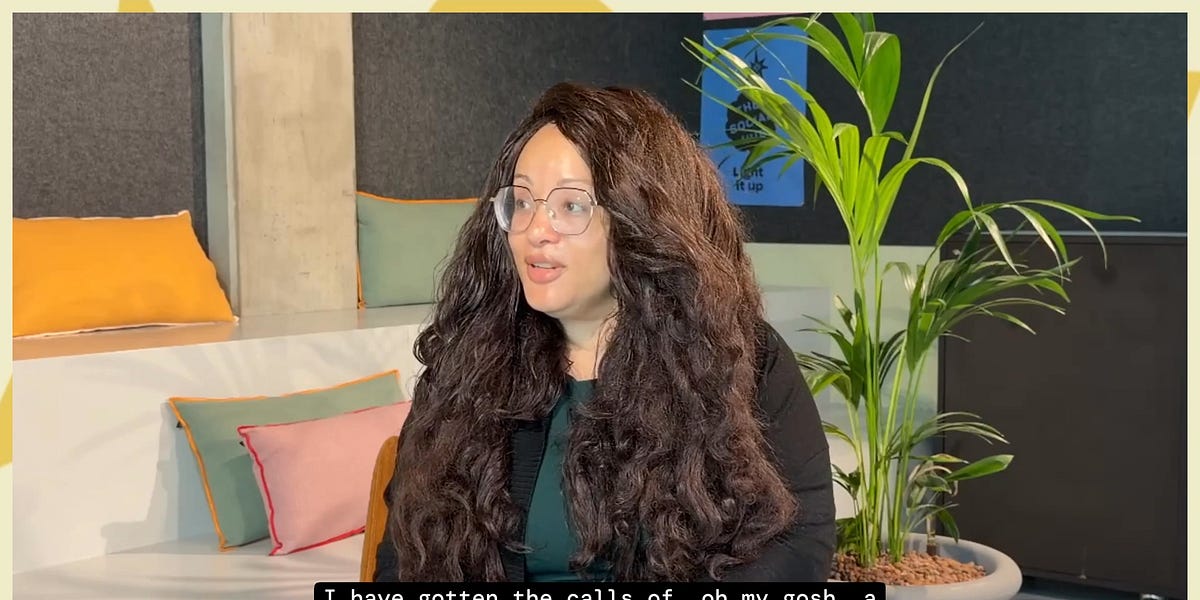
Angeley Mullins has scaled seven companies. Here is what she looks for in a founder before she gets to the business, and what it changes about how you think about traction.

Changing Shapes is a podcast for founders, builders and operators who want to build things that connect with the people who use them. Host Tom Horak, founder of All Shapes, talks with people who have built that relationship between product and audience, and gets them to walk through exactly how.
Every product creates a relationship between the person who made it and the person who uses it. In an era when anyone can build anything, the maker is what makes that relationship real. And the question of why you are the one building this is no longer a branding exercise. It is what the audience feels, or does not feel, when they open the thing you made.
Angeley Mullins sits at the funding end of that chain. She does not make products, she backs the people who do. Which means her job is to protect that relationship upstream. If the maker is what makes the connection real, backing the wrong maker is not a business mistake. It is a relationship that will never form.
She has scaled seven companies across big tech and scale-ups, including one unicorn and one IPO. She started as an outbound salesperson in the pre-HubSpot era, which in her words taught her more about business and life than most people learn in a decade. Now she advises and backs founders through her firm Aetheris Ventures. She is the person founders call when their funding falls through, their product has no market fit, or they need to let half the team go on a Friday morning.
When she meets a founder for the first time, she does not open with the business. She wants to have a coffee.
“My first and primary motive is to make sure I’m backing good people,” she says. “So that’s what I look at first. Then we go to the business piece.”
The first conversation is about the person. She is listening for resilience, grit, adaptability, whether this founder is a decent human, whether they can overcome challenges. The plan, in her experience, always falls apart at some point. The only thing left when it does is the person. And if the person cannot hold the relationship with the audience together through that moment, the product will not hold either.
Person first, business second. Most investors run that sequence backwards. They read the deck, get interested in the deck, and only then start paying attention to the human. By that point the conversation is already about numbers, and the chance to read the person has passed.
When the business conversation does come, she has a second test that cuts through most of what founders are proud of. A founder tells her they have ten thousand people on their email list. Great, she says. Have any of them paid you. No. Then you do not have anything.
Audience numbers, follower counts and free community sizes are all measurements of access. None of them measure whether a single person has chosen to commit. An email list is a list of people who have agreed to hear from you. It is not a list of people who have decided you are worth paying for. When Angeley asks “has anyone paid you,” she is asking whether the relationship between the product and the audience is real, or whether the founder has confused reach with traction.
She has specific advice for female founders on this. Stop running free communities. Start running memberships. Stop burning yourselves out giving everything away before anyone has had to commit. The work it takes to run a community is the same either way. The difference is whether the audience has had to decide you are worth something.
Taking VC money, Angeley says, is like getting married, with more legal constraints. So you have to be honest about what kind of marriage this is going to be. For female founders and founders of color in particular, she has a simple instruction for walking into a first meeting. Show up as yourself. Hair up, gym clothes, whatever. Take the first ten seconds. Watch how the investor looks at you. That tells you exactly how the whole relationship is going to go.
The ten-second read is the founder’s version of what Angeley does with her coffee. Both sides are reading the person before they read the terms. The difference is that most founders have been taught to sell the deck and prove the numbers, and have not been taught that the investor is doing the same thing to them that Angeley is doing to founders. Reading the human. Deciding if this is someone they want to be in a relationship with when things go badly, because at some point things will go badly.
The three ideas are the same idea at different scales. What Angeley trusts, across all of it, is what holds up when the performance stops.
Listen to the full episode on Apple Podcasts, Spotify or YouTube.
Tom Horak is the founder of All Shapes, a strategy, design and development studio behind products including Five Minute Journal and Doctor’s Kitchen. He started his career in fine art and has spent over a decade thinking about what makes the relationship between a product and its audience hold up. On LinkedIn here.
Changing Shapes lands here every week. Subscribe to get new episodes and essays in your inbox.
Recorded at The Social Hub Berlin.

